

Blush
10 years ago

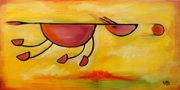 Dog and the Monkey
 "Cambria" by Denton Lund
"I am continuously striving to stretch beyond my limitations and parameters in the process I use, in the themes I select, in the subjects I render, and in the colors I express in my paintings. Each act of painting, as it becomes more spontaneous, also becomes a satisfying journey of delight and discovery. Through my paintings, I seek to establish a connection with those who view my work so that they may also share in the journey. The paintings, themselves, form the bond between the artist and those who would view them."
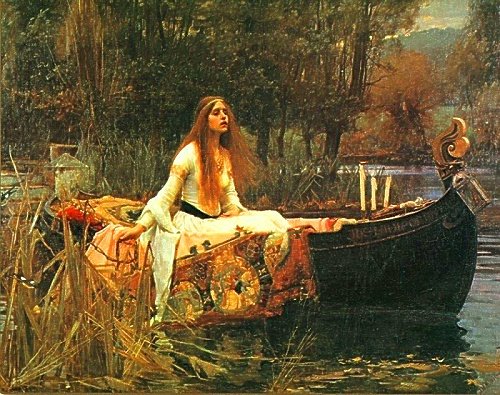 The Lady of Shalott, 1888 John William Waterhouse
Quote from http://www.jwwaterhouse.com/
"John William Waterhouse (1849-1917), affectionately known as Nino in his younger days, was born in Rome on the 6th of April, 1849. Both of his parents were English painters who moved to Italy in pursuit of art. Waterhouse and his parents eventually moved back to England some time in the late 1850's. While growing up, Waterhouse assisted his father in art studio where the young Waterhouse developed his talents for sculpting and painting. In England, after several attempts at admission to the Royal Academy, he finally succeeded entrance in 1870. In 1885, Waterhouse became an Associate of the Royal Academy, and then a full member, Royal Academician, in 1895.
Although often classified as a Pre-raphaelite for his style and themes, Waterhouse is truly a Neo-Classic painter. Some of Waterhouse's earlier works were focused on Italian themes and scenery, reflecting his love for his birth place. Later on, his works picked up the styles and classical themes of Pre-raphaelites such as Alma-Tadema and Frederick Leighton. Waterhouse went on to paint well over 200 paintings depicting classical mythogolgy, historical and literary subjects, particularly those of Roman mythology and classic English poets such as Keats and Tennyson. Femme fatale is a common theme in his works, as most are of beautiful elegaic women and of many men are victims.
Waterhouse is one of the rare artists who became popular and relatively well-off financially when he was alive. He continued to paint until his death on the 10th of February, 1917 after a long illness. His style became a major influence on many of the later Pre-raphaelites including Frank Dicksee and Herber James Draper.
Today, many of his works are in private collections or somewhere unknown; however, most of his famous paintings can be found scattered all over England. Among these is "The Lady of Shalott" - 1888, which can be found in London; "Hylas and the Nymphs" - 1896, at Manchester City Art Gallery, and "Echo and Narcissus" - 18xx, at the Walker Art Gallery in Liverpool. His other famous works can be found around the world including Germany (La Belle Dame Sans Merci), Scotland (Penelope and the Suitors), and Australia (Circe Invidiosa)."
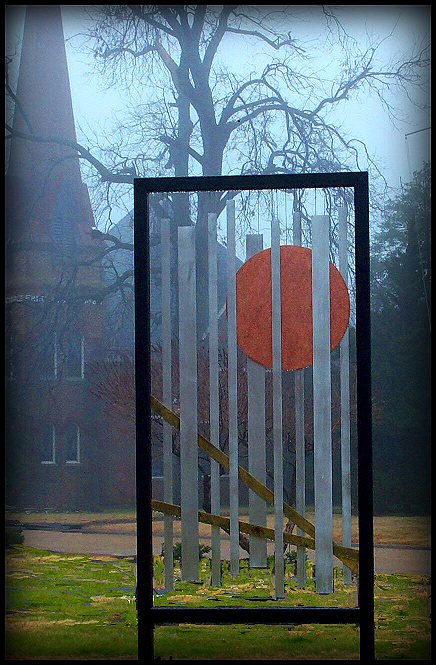
From Wikipedia ~ "The earliest example of a theatrical production that incorporated rock and pop music was Hair, a hippie-themed musical subtitled "The American Love/Rock Musical" that made its debut in late 1967. Much like Jesus Christ Superstar, the first notable rock musical after Hair, it was very controversial in its day. Jesus Christ Superstar, composed by Andrew Lloyd Webber and Tim Rice was first recorded as a concept album in 1970 and the money made from album sales was used to fund the subsequent stage production in late 1971. The musical Godspell which was written after Jesus Christ Superstar but was actually staged before it, had similar religious themes (albeit much less controversial) and pop/rock influences. "
and
"The Who returned with Tommy, the first album explicitly billed as a rock opera. Tommy remains one of the most famous rock operas, with concert, film and theatrical productions mounted over the course of three decades. The Who would later release another rock opera, Quadrophenia, also made into a film.
Townshend may also be the originator of the term itself. In 1966, he played a comedy tape to his friends called "Gratis Amatis". One of his friends made the comment that the odd song was "rock opera." Kit Lambert, the Who's producer, is than believed to have said "Now there's an idea!" However, the July 4, 1966 edition of "RPM Magazine (published in Toronto) notes that "Bruce Cockburn and Mr [William] Hawkins are working on a Rock Opera, operating on the premise that to write you need only 'something to say'."
Ten years later, Pink Floyd enjoyed similar success with their rock opera The Wall, written primarily by Roger Waters, which became the third best-selling album of all time. As with Tommy, The Wall has been staged both by Pink Floyd (1980-81) and Waters (1990) as an incredibly elaborate concert, with Waters' version taking place at the Berlin Wall. The plot was also used in an eponymous feature film, and Waters is currently adapting the story for a Broadway-style production."
 Point is art is many disciplines rolled into an umbrella. Art, it may be said, is the enlightenment of the mind where muses create , dance, sing and make clear images and we may all be amused in the more complex sense of the word. Everything good is found in truth and reality and it is always a mixture of comedy and tragedy and never the absence of either.
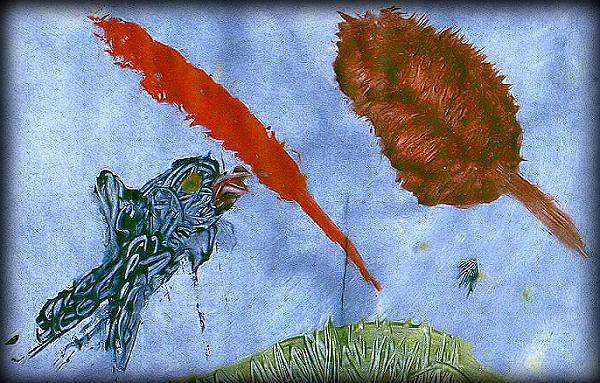
Across The UniverseI looked for the meaning of "Jai guru de va" and came up with this explaination.
(Lennon and McCartney)
Words are flowing out like endless rain into a paper cup,
They slither while they pass, they slip away across the universe
Pools of sorrow, waves of joy are drifting through my open mind,
Possessing and caressing me.
Jai guru de va om
Nothing's gonna change my world
Nothing's gonna change my world.
Nothing's gonna change my world
Nothing's gonna change my world.
Images of broken light which dance before me like a million eyes,
That call me on and on across the universe,
Thoughts meander like a restless wind inside a letter box they
Tumble blindly as they make their way
Across the universe
Jai guru de va om
Nothing's gonna change my world
Nothing's gonna change my world.
Nothing's gonna change my world
Nothing's gonna change my world.
Sounds of laughter shades of earth are ringing
Through my open ears inciting and inviting me
Limitless undying love which shines around me like a
million suns, it calls me on and on
Across the universe
Jai guru de va om
Nothing's gonna change my world
Nothing's gonna change my world.
Nothing's gonna change my world
Nothing's gonna change my world.
Jai guru de va, jai guru de va
Jai guru de va, jai guru de va
Jai guru de va.
"The line "jai guru deva om" is a mantra of John's designed to help him concentrate while meditating, something he was into at the time. It means roughly "Glory to the spiritual master" and has the focusing sound "omm" at the end. (Translation varies according to particular level of Sanskrit used for divination.)"
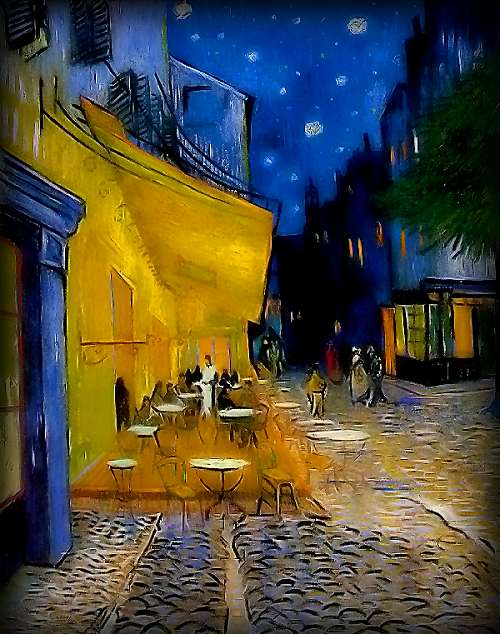
Cafe is the first in a trilogy of paintings which feature starlit skies. Starry Night Over the Rhone came within a month, followed by the popular Starry Night painted the next year in Saint-Ramy.
For me this painting is what art is about - touching souls. I used to say "I just don't get it. What's so special about a painting?" Later I found Escher fascinating, Picasso weird, Rembrandt crisp, Michelangelo mystical,O'Keeffe sensual, etc.
Then I see Sargent's Ambergris and in it's simplicity it tells a story. They all can come alive and we begin to realize that art is the release of our souls and can only really be seen when we cut through the numbing existence in which all of us humans reside.
Art is a trip just like the drugs some take or the adrenaline rush of an athlete. It's the escape of a movie or novel or the RV trip across the states. It's the submission to confession I took as a young man feeling free of sin. It's winning the superbowl.
Do you ever wonder why we all try so hard to escape our very average lives and the repetition? Why do we fall back so easily into the rut we travel very much like a worn path used by a herd of cattle?
My most current wonder is to ask how does the large body of fine art that is so diverse touch souls and bring them to life or cause them to dream of worlds unknown - or worlds that should be.
Touching Souls
As the wind whispers through the leaves
I hear a melody as sweet as a symphony
It's the voice of tenderness
From an open soul
It's never as it seems
It's the sound of two souls touching
